
Cisco Enterprise Networking Solutions: Reliable, Scalable & Secure Connectivity
Cisco has long been recognized for developing networking technologies used across businesses, institutions, and large-scale IT environments. Enterprise networks require more than basic internet connectivity—they need reliable wireless access, centralized management, security, and the ability to support growing numbers of users and devices.
Cisco networking equipment can help organizations build structured network environments where wireless access points, controllers, and supporting components work together as part of a managed infrastructure.
Key advantages include:
- Reliable connectivity for business-critical applications
- Centralized network management
- Scalable infrastructure for growing organizations
- Enterprise-grade networking capabilities
- Improved visibility and control
- Flexible deployment options
Building a More Reliable Enterprise Network
A successful enterprise network requires multiple components working together. Wireless access points provide connectivity to users and devices, while controllers and supporting hardware help IT teams manage the infrastructure.
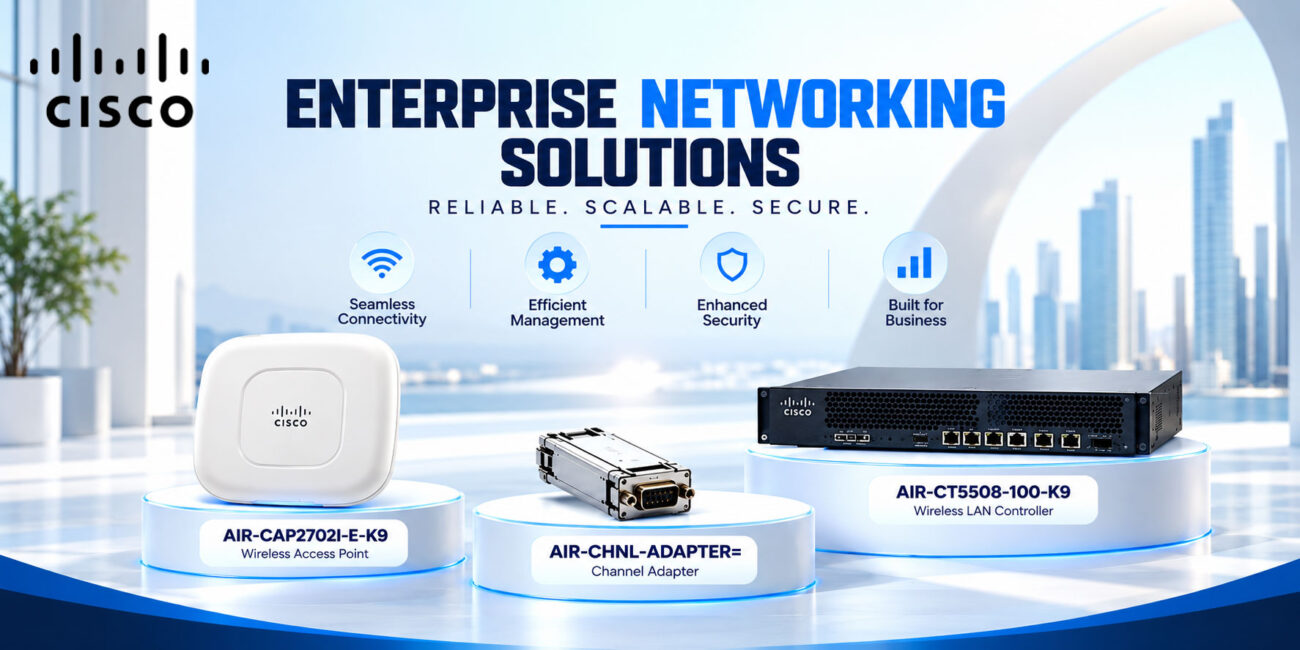
The combination of AIR-CAP2702I-E-K9, AIR-CHNL-ADAPTER=, and AIR-CT5508-100-K9 represents different components that can be relevant to Cisco-based enterprise networking environments.
Businesses can evaluate their existing infrastructure, compatibility requirements, network size, and future expansion plans before selecting equipment.
Cost-Effective Networking with Available Cisco Equipment
Upgrading an enterprise network does not always require replacing every component with brand-new equipment. Depending on the organization’s requirements, budget, and compatibility needs, refurbished or previously deployed Cisco networking equipment can provide a practical alternative.
This can be especially useful for:
- Expanding an existing Cisco network
- Replacing failed equipment
- Maintaining legacy infrastructure
- Supporting additional network locations
- Keeping spare equipment in inventory
- Managing IT budgets more efficiently
However, businesses should always verify product condition, compatibility, configuration requirements, and warranty or support options before purchasing networking equipment.
What Should Businesses Consider Before Buying?
Before selecting Cisco enterprise networking equipment, IT teams should evaluate several factors.
1. Compatibility
Make sure the equipment is compatible with the organization’s existing network infrastructure, software environment, and other Cisco devices.
2. Network Requirements
Consider the number of users, connected devices, wireless coverage requirements, traffic levels, and expected network growth.
3. Product Condition
For refurbished or previously used equipment, carefully evaluate physical condition, functionality, testing procedures, and available warranty.
4. Scalability
Choose equipment that fits both current requirements and future expansion plans.
5. Budget
Compare the total cost of ownership rather than focusing only on the initial purchase price.
The Importance of Reliable Enterprise Connectivity
A dependable network is now fundamental to almost every business operation. Cloud applications, video conferencing, VoIP, collaboration platforms, cybersecurity systems, IoT devices, and business applications all depend on reliable connectivity.
That makes networking infrastructure a strategic investment rather than simply an IT expense.
With appropriate planning and the right equipment, businesses can develop networking environments that support productivity while providing the flexibility needed for future growth.



Leave a comment